
Entry
Reader's guide
Entries A-Z
Assumptions
Assumptions are ubiquitous in social science. In theoretical work, assumptions are the starting axioms and postulates that yield testable implications spanning broad domains. In empirical work, statistical procedures typically embed a variety of assumptions, for example, concerning measurement properties of the variables and the distributional form and operation of unobservables (such as HOMOSKEDASTICITY or NORMALDISTRIBUTION of the ERROR). Assumptions in empirical work are discussed in the entries for particular procedures (e.g., ORDINARY LEAST SQUARES); here we focus on assumptions in theories.
The purpose of a scientific theory is to yield testable implications concerning the relationships between observable phenomena. The heart of the theory is its set of assumptions. The assumptions embody what Popper (1963) calls “guesses” about nature—guesses to be tested, following Newton's vision, by testing their logical implications. An essential feature of the assumption set is internal logical consistency. In addition, three desirable properties of a theory are as follows: (a) that its assumption set be as short as possible, (b) that its observable implications be as many and varied as possible, and (c) that its observable implications include phenomena or relationships not yet observed, that is, novel predictions.
Thus, a theory has a two-part structure: a small part containing the assumptions and a large and evergrowing part containing the implications. Figure 1 provides a visualization of the structure of a theory.
A theory can satisfy all three properties above and yet be false. That is, one can invent an imaginary world, set up a parsimonious set of postulates about its operation, deduce a wide variety of empirical consequences, and yet learn through empirical test that no known world operates in conformity with the implications derived from the postulated properties of the imaginary world. That is why empirical analysis is necessary, or, put differently, why theoretical analysis alone does not suffice for the accumulation of reliable knowledge.
A note on terminology: Assumption is a general term, used, as noted earlier, in both theoretical and empirical work. Sharper terms sometimes used in theoretical work include axiom, which carries the connotation of self-evident, and postulate, which does not, and is therefore more faithful to an enterprise marked by guesses and bound for discovery. Other terms include the serviceable premise, the colorful starting principle, and the dangerous hypothesis, which is used not only as a postulate (as in the HYPOTHETICO-DEDUCTIVE METHOD invented by Newton) but also as an observable proposition to be tested.
Where do assumptions come from? Typically, the frameworks for analyzing topical domains include a variety of relations and FUNCTIONS, some of which may prove to be fruitful assumptions. In general, mathematically expressed functions make promising assumptions, as (a) their very statement signals generality and breadth, and (b) they are amenable to manipulation via mathematical tools, which make it easy to derive a wealth of implications and, unlike verbal covering-law procedures, make it possible to derive novel predictions.

Figure 1 Structure of a Theory
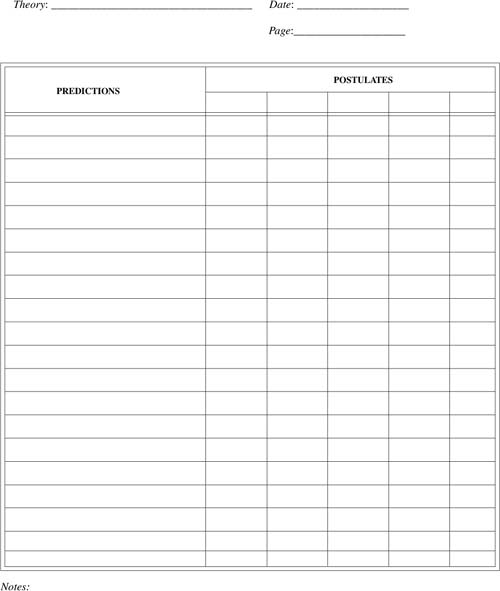
Figure 2 Merton Chart of Theoretical Derivation
The tools for derivation of predictions include the full panoply of mathematical tools. Besides functions, these include DISTRIBUTIONS, MATRICES, inequalities, and partial differential equations. For example, the quantities related via functions can be characterized by their distributional properties, and the distributional form shapes the character of the predictions. The results can be surprising. Assumptions that look innocent turn out to touch vast domains in unexpected ways. To illustrate, the justice evaluation function, when used as an assumption, yields predictions for parental gift giving, differential mourning of mothers and fathers, differential risk of posttraumatic stress among combat veterans, differential social contributions of monastic and mendicant religious institutions, and inequality effects on migration (Jasso, 2001).
...
- Analysis of Variance
- Association and Correlation
- Association
- Association Model
- Asymmetric Measures
- Biserial Correlation
- Canonical Correlation Analysis
- Correlation
- Correspondence Analysis
- Intraclass Correlation
- Multiple Correlation
- Part Correlation
- Partial Correlation
- Pearson's Correlation Coefficient
- Semipartial Correlation
- Simple Correlation (Regression)
- Spearman Correlation Coefficient
- Strength of Association
- Symmetric Measures
- Basic Qualitative Research
- Basic Statistics
- F Ratio
- N(n)
- t-Test
- X¯
- Y Variable
- z-Test
- Alternative Hypothesis
- Average
- Bar Graph
- Bell-Shaped Curve
- Bimodal
- Case
- Causal Modeling
- Cell
- Covariance
- Cumulative Frequency Polygon
- Data
- Dependent Variable
- Dispersion
- Exploratory Data Analysis
- Frequency Distribution
- Histogram
- Hypothesis
- Independent Variable
- Measures of Central Tendency
- Median
- Null Hypothesis
- Pie Chart
- Regression
- Standard Deviation
- Statistic
- Causal Modeling
- DISCOURSE/CONVERSATION ANALYSIS
- Econometrics
- Epistemology
- Ethnography
- Evaluation
- Event History Analysis
- Experimental Design
- Factor Analysis and Related Techniques
- Feminist Methodology
- Generalized Linear Models
- HISTORICAL/COMPARATIVE
- Interviewing in Qualitative Research
- Latent Variable Model
- LIFE HISTORY/BIOGRAPHY
- LOG-LINEAR MODELS (CATEGORICAL DEPENDENT VARIABLES)
- Longitudinal Analysis
- Mathematics and Formal Models
- Measurement Level
- Measurement Testing and Classification
- Multilevel Analysis
- Multiple Regression
- Qualitative Data Analysis
- Sampling in Qualitative Research
- Sampling in Surveys
- Scaling
- Significance Testing
- Simple Regression
- Survey Design
- Time Series
- ARIMA
- Box-Jenkins Modeling
- Cointegration
- Detrending
- Durbin-Watson Statistic
- Error Correction Models
- Forecasting
- Granger Causality
- Interrupted Time-Series Design
- Intervention Analysis
- Lag Structure
- Moving Average
- Periodicity
- Serial Correlation
- Spectral Analysis
- Time-Series Cross-Section (TSCS) Models
- Time-Series Data (Analysis/Design)
- Trend Analysis
Get a 30 day FREE TRIAL
-
 Watch videos from a variety of sources bringing classroom topics to life
 -
Read modern, diverse business cases
-
Explore hundreds of books and reference titles

Read next

More like this
Sage Recommends
We found other relevant content for you on other Sage platforms.
Have you created a personal profile? Login or create a profile so that you can save clips, playlists and searches