
Entry
Entries A-Z
Subject index
Artifacts
Artifacts are things that societies and cultures make for their own use. They provide material evidence of the past by documenting and recording the past. Artifacts can provide historical, demographic, and (sometimes) personal information about a culture, society, or people. Insights into how people lived, what they valued and believed, their ideas and assumptions, and their knowledge and opinions are revealed in artifacts.
Examples of artifacts include photographs, memorabilia, tools, buildings, toys, pottery, jewelry, clothing, weapons, gifts, paintings, graffiti, furniture, and tombstones (Figure 1). They can be religious, artistic, technological, or functional in nature. A common type of artifact is written texts such as documents, diaries, journals, memos, meeting minutes, and letters. Archival records are also sources of artifacts and include public records (e.g., birth, marriage, or death certificates), voting records, and newspapers. Artifacts may also be in the form of film, television, and music.
Besides being items that people have created (e.g., notes, diaries, journals, jewelry, pottery), artifacts can also be things that people have worn away. For example, paths created in grass where people commonly walk and the shine worn away from heavily trafficked areas of a floor would be artifacts that reveal how people navigate a space.
Artifacts can also be researcher generated. For example, the researcher may ask participants in the study to keep a journal. The journal would become an artifact of the study.
The term material culture is used in association with artifacts. Material culture covers a broad spectrum and refers to the sum of artifacts found in a culture or society. In general, these artifacts are everyday objects that have been left behind or made by people to satisfy needs or wants or to express an idea or belief. They are products of a culture or society.
Figure 1 Examples of Artifacts
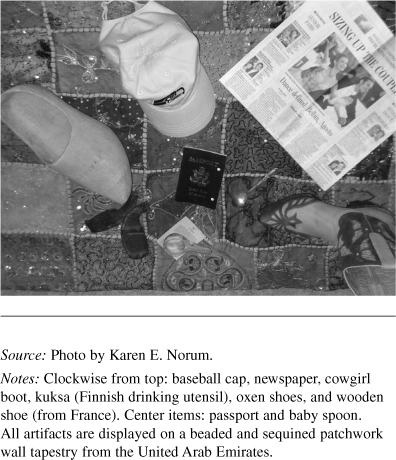
Artifacts are a frequently overlooked source of data. They serve to enrich a study and often provide information not available from interview or observational data. Although not common, it is possible to build an entire study around artifacts. Bold Spirit: Helga Estby's Forgotten Walk Across Victorian America by Linda Lawrence Hunt was based almost entirely on artifacts. Helga Estby and her daughter walked from Spokane, Washington, to New York City in 1896. The little evidence that remains of the journey is in the form of diaries, notes, photographs, letters, and newspaper accounts. Relying primarily on these artifacts, supplemented by interviews with living relatives, Hunt was able to piece together the remarkable cross-country adventure.
Artifacts are a unique source of data that often are right in front of us. They shed light on important aspects of a person, society, or culture, enriching any study.
Further Readings
- Loading...
Get a 30 day FREE TRIAL
-
 Watch videos from a variety of sources bringing classroom topics to life
 -
Read modern, diverse business cases
-
Explore hundreds of books and reference titles

Read next

More like this
Sage Recommends
We found other relevant content for you on other Sage platforms.
Have you created a personal profile? Login or create a profile so that you can save clips, playlists and searches