
Entry
Reader's guide
Entries A-Z
Subject index
Logic Model
An articulated model of how a program or project is understood or intended to contribute to its specified outcomes and that focuses on intermediate outcomes rather than tightly specified processes is a logic model. Such models are usually shown diagrammatically but can be reported in narrative form. Although logic models have become increasingly popular in recent years, their use can be traced back at least to the 1960s, when Suchman suggested that evaluation might address the achievement of a “chain of objectives.”
Logic models can be developed prospectively for planned new programs or retrospectively for existing programs. Logic models can be used in various ways: (a) to guide an evaluation; (b) to provide staff and other stakeholders with a common, motivating vision; and (c) to report a performance story to funders and senior decision makers. Ideally, a performance story based on a logic model does not simply report evidence to support the causal chain but addresses the extent to which the outcomes can reasonably be attributed to the program and the influence of external factors.
Logic models can be drawn with the causal sequence going from left to right, from top to bottom, from bottom to top, or even from the outside into the center of a circle.
Where there are multiple strands of a program logic, it can be important to make it clear whether these are alternative causal paths or complementary paths. For example, in Figure 1, the program logic diagram for a home visiting service for parents of young children, the two strands are complementary—it is understood that both are needed for the program to succeed—which has implications for both practice and evaluation.
Nurses need to balance their advice on infant nutrition with a concern not to undermine parental confidence. Evaluation of such programs needs to focus on both these intermediate outcomes. Logic models that show such complementary strands can identify points at which programs need to achieve a reasonable balance between competing imperatives rather than optimizing one of them at the cost of the other.
It can also be important for practice and for evaluation to identify alternative causal paths—different ways in which participants might achieve the intended outcomes. These can be particularly important in making valid comparisons between the outcomes of participants in the program and of nonparticipants. It cannot be assumed that the program is the only way in which the intended outcomes can be achieved or that the program works in the same way for all participants. In some cases, it is possible to show the particular contexts in which particular causal paths will operate, taking a realist approach to thinking about programs and evaluations.
There is some debate as to whether a diagram of boxes labeled Inputs, Processes and activities, Outputs and short-term outcomes, and Outcomes and long-term outcomes (sometimes preceded by a fifth box, labeled Context) is sufficient to constitute a logic model (see Figure 2 for an example used by the United Way).
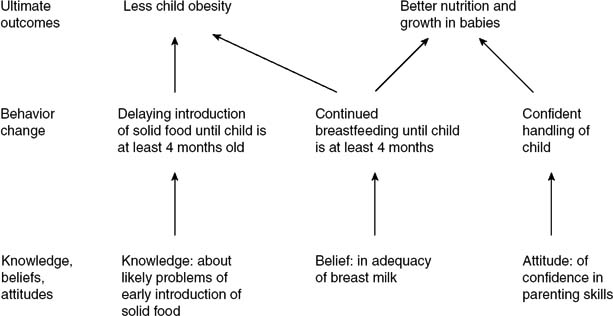
Figure 1Complementary Paths in a Logic Model
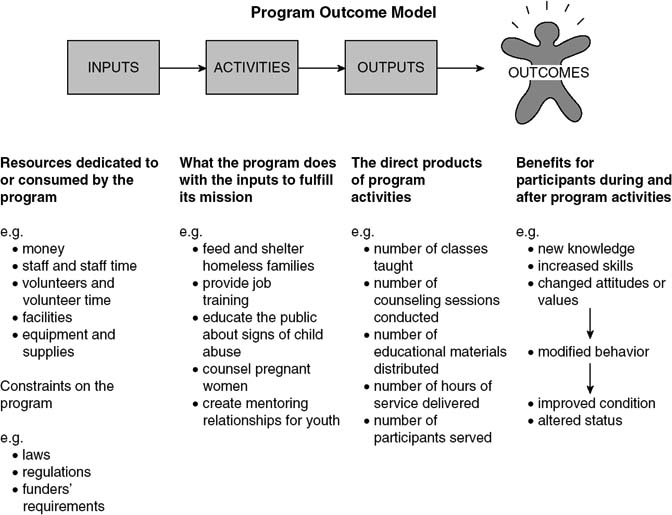
Figure 2Illustration of a Simple Logic Model
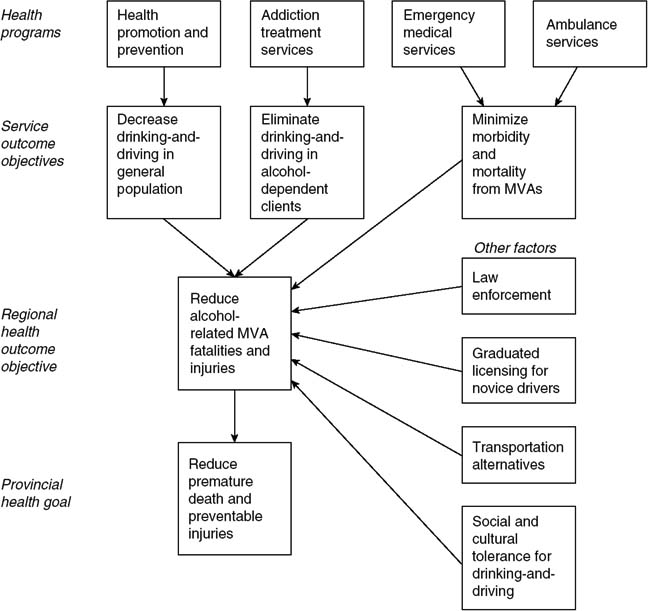
Figure 3Representing Other Factors in a Logic Model
...
- Concepts, Evaluation
- Personnel Evaluation
- Advocacy in Evaluation
- Evaluand
- Evaluation
- Evaluator
- Evaluator Roles
- External Evaluation
- Formative Evaluation
- Goal
- Grading
- Independence
- Internal Evaluation
- Judgment
- Logic of Evaluation
- Merit
- Metaevaluation
- Objectives
- Personnel Evaluation
- Process Evaluation
- Product Evaluation
- Program Evaluation
- Quality
- Ranking
- Standard Setting
- Standards
- Summative Evaluation
- Synthesis
- Value Judgment
- Values
- Worth
- Concepts, Methodological
- 360-Degree Evaluation
- Accountability
- Achievement
- Affect
- Analysis
- Applied Research
- Appraisal
- Appropriateness
- Assessment
- Audience
- Best Practices
- Black Box
- Capacity Building
- Client
- Client Satisfaction
- Consumer
- Consumer Satisfaction
- Control Conditions
- Cost
- Cost Effectiveness
- Criterion-Referenced Test
- Critique
- Cut Score
- Description
- Design Effects
- Dissemination
- Effectiveness
- Efficiency
- Feasibility
- Hypothesis
- Impact Assessment
- Implementation
- Improvement
- Indicators
- Inputs
- Inspection
- Interpretation
- Intervention
- Interviewing
- Literature Review
- Longitudinal Studies
- Measurement
- Modus Operandi
- Most Significant Change Technique
- Norm-Referenced Tests
- Opportunity Costs
- Outcomes
- Outputs
- Peer Review
- Performance Indicator
- Performance Program
- Personalizing Evaluation
- Rapport
- Reactivity
- Reliability
- Sampling
- Score Card
- Secondary Analysis
- Services
- Setting
- Significance
- Situational Responsiveness
- Social Indicators
- Sponsor
- Stakeholder Involvement
- Treatments
- Triangulation
- Concepts, Philosophical
- Verstehen
- Aesthetics
- Ambiguity
- Amelioration
- Argument
- Authenticity
- Authority of Evaluation
- Bias
- Conclusions, Evaluative
- Consequential Validity
- Construct Validity
- Context
- Credibility
- Criteria
- Difference Principle
- Empiricism
- Epistemology
- Equity
- External Validity
- Falsifiability
- Generalization
- Hermeneutics
- Inference
- Internal Validity
- Interpretation
- Interpretivism
- Logical Positivism
- Meaning
- Means-End Relations
- Moral Discourse
- Objectivity
- Ontology
- Paradigm
- Pareto Optimal
- Pareto Principle
- Phenomenology
- Point of View
- Positivism
- Postmodernism
- Postpositivism
- Praxis
- Probative Logic
- Proxy Measure
- Rationality
- Relativism
- Subjectivity
- Tacit Knowledge
- Trustworthiness
- Understanding
- Validity
- Value-Free Inquiry
- Values
- Veracity
- Concepts, Social Science
- Capitalism
- Chaos Theory
- Constructivism
- Critical Incidents
- Deconstruction
- Dialogue
- Disenfranchised
- Experimenting Society
- Feminism
- Great Society Programs
- Ideal Type
- Inclusion
- Lesbian, Gay, Bisexual, and Transgender Issues in Evaluation
- Minority Issues in Evaluation
- Persuasion
- Policy Studies
- Politics of Evaluation
- Qualitative-Quantitative Debate in Evaluation
- Social Class
- Social Context
- Social Justice
- Ethics and Standards
- The Program Evaluation Standards
- Certification
- Communities of Practice (CoPs)
- Confidentiality
- Conflict of Interest
- Ethical Agreements
- Ethics
- Guiding Principles for Evaluators
- Honesty
- Human Subjects Protection
- Impartiality
- Informed Consent
- Licensure
- Profession of Evaluation
- Propriety
- Public Welfare
- Reciprocity
- Social Justice
- Teaching Evaluation
- Evaluation and Approaches
- Accreditation
- Action Research
- Appreciative Inquiry
- Artistic Evaluation
- Auditing
- CIPP Model (Concept, Input, Process, Product)
- Cluster Evaluation
- Community-Based Evaluation
- Connoisseurship
- Cost-Benefit Analysis
- Countenance Model of Evaluation
- Critical Theory Evaluation
- Culturally Responsive Evaluation
- Deliberative Democratic Evaluation
- Democratic Evaluation
- Developmental Evaluation
- Empowerment Evaluation
- Evaluative Inquiry
- Experimental Design
- Feminist Evaluation
- Fourth-Generation Evaluation
- Goal-Free Evaluation
- Illuminative Evaluation
- Inclusive Evaluation
- Institutional Self-Evaluation
- Judicial Model of Evaluation
- Kirkpatrick Four-Level Evaluation Model
- Logic Model
- Models of Evaluation
- Multicultural Evaluation
- Naturalistic Evaluation
- Objectives-Based Evaluation
- Participatory Action Research (PAR)
- Participatory Evaluation
- Participatory Monitoring and Evaluation
- Quasiexperimental Design
- Realist Evaluation
- Realistic Evaluation
- Responsive Evaluation
- Success Case Method
- Transformative Paradigm
- Utilization-Focused Evaluation
- Evaluation Practice around the World, Stories
- Evaluation Planning
- Evaluation Theory
- Laws and Legislation
- Organizations
- Abt Associates
- Active Learning Network for Accountability and Performance in Humanitarian Action (ALNAP)
- American Evaluation Association (AEA)
- American Institutes for Research (AIR)
- Buros Institute
- Center for Instructional Research and Curriculum Evaluation (CIRCE)
- Center for Research on Evaluation, Standards, and Student Testing (CRESST)
- Center for the Study of Evaluation (CSE)
- Centers for Disease Control and Prevention (CDC)
- Centre for Applied Research in Education (CARE)
- ERIC Clearinghouse on Assessment and Evaluation
- Evaluation Center, The
- Evaluation Research Society (ERS)
- Evaluators' Institute™, The
- General Accounting Office (GAO)
- International Development Evaluation Association (IDEAS)
- International Development Research Center (IDRC)
- International Organization for Cooperation in Evaluation (IOCE)
- International Program in Development Evaluation Training (IPDET)
- Joint Committee on Standards for Educational Evaluation
- Mathematica Policy Research
- MDRC
- National Assessment of Educational Progress (NAEP)
- National Institutes of Health (NIH)
- National Science Foundation (NSF)
- Organisation for Economic Co-operation and Development (OECD)
- Performance Assessment Resource Centre (PARC)
- Philanthropic Evaluation
- RAND Corporation
- Research Triangle Institute (RTI)
- United States Agency of International Development (USAID)
- Urban Institute
- Westat
- WestEd
- World Bank
- World Conservation Union (IUCN)
- People
- Abma, Tineke A.
- Adelman, Clem
- Albæk, Erik
- Alkin, Marvin C.
- Altschuld, James W.
- Bamberger, Michael J.
- Barrington, Gail V.
- Bhola, H. S.
- Bickel, William E.
- Bickman, Leonard
- Bonnet, Deborah G.
- Boruch, Robert
- Brisolara, Sharon
- Campbell, Donald T.
- Campos, Jennie
- Chalmers, Thomas
- Chelimsky, Eleanor
- Chen, Huey-Tsyh
- Conner, Ross
- Cook, Thomas D.
- Cooksy, Leslie
- Cordray, David
- Cousins, J. Bradley
- Cronbach, Lee J.
- Dahler-Larsen, Peter
- Datta, Lois-ellin
- Denny, Terry
- Eisner, Elliot
- Engle, Molly
- Farrington, David
- Fetterman, David M.
- Fitzpatrick, Jody L.
- Forss, Kim
- Fournier, Deborah M.
- Freeman, Howard E.
- Frierson, Henry T.
- Funnell, Sue
- Georghiou, Luke
- Glass, Gene V
- Grasso, Patrick G.
- Greene, Jennifer C.
- Guba, Egon G.
- Hall, Budd L.
- Hastings, J. Thomas
- Haug, Peder
- Henry, Gary T.
- Hood, Stafford L.
- Hopson, Rodney
- House, Ernest R.
- Hughes, Gerunda B.
- Ingle, Robert
- Jackson, Edward T.
- Julnes, George
- King, Jean A.
- Kirkhart, Karen
- Konrad, Ellen L.
- Kushner, Saville
- Leeuw, Frans L.
- Levin, Henry M.
- Leviton, Laura
- Light, Richard J.
- Lincoln, Yvonna S.
- Lipsey, Mark W.
- Lundgren, Ulf P.
- Mabry, Linda
- MacDonald, Barry
- Madison, Anna Marie
- Mark, Melvin M.
- Mathison, Sandra
- Mertens, Donna M.
- Millet, Ricardo A.
- Moos, Rudolf H.
- Morell, Jonathan A.
- Morris, Michael
- Mosteller, Frederick
- Narayan, Deepa
- Nathan, Richard
- Nevo, David
- Newcomer, Kathryn
- Newman, Dianna L.
- O'Sullivan, Rita
- Owen, John M.
- Patel, Mahesh
- Patton, Michael Quinn
- Pawson, Ray
- Pollitt, Christopher
- Porteous, Nancy L.
- Posavac, Emil J.
- Preskill, Hallie
- Reichardt, Charles S. (Chip)
- Rist, Ray C.
- Rog, Debra J.
- Rogers, Patricia J.
- Rossi, Peter H.
- Rugh, Jim
- Russon, Craig W.
- Ryan, Katherine E.
- Sanders, James R.
- Scheirer, Mary Ann
- Schwandt, Thomas A.
- Scriven, Michael
- Shadish, William R.
- Shulha, Lyn M.
- Simons, Helen
- Smith, M. F.
- Smith, Nick L.
- Stake, Robert E.
- Stanfield, John II
- Stanley, Julian C.
- Stufflebeam, Daniel L.
- Tilley, Nick
- Torres, Rosalie T.
- Toulemonde, Jacques
- Trochim, William
- Tyler, Ralph W.
- VanderPlaat, Madine
- Wadsworth, Yoland
- Walberg, Herbert J.
- Walker, Rob
- Weiss, Carol Hirschon
- Whitmore, Elizabeth
- Wholey, Joseph S.
- Wildavsky, Aaron B.
- Worthen, Blaine R.
- Wye, Christopher G.
- Publications
- American Journal of Evaluation
- Evaluation & the Health Professions
- Evaluation and Program Planning
- Evaluation Review: A Journal of Applied Social Research
- Evaluation: The International Journal of Theory, Research and Practice
- New Directions for Evaluation (NDE)
- Practical Assessment, Research on Evaluation (PARE)
- The Personnel Evaluation Standards
- The Program Evaluation Standards
- EvalTalk
- Guiding Principles for Evaluators
- Qualitative Methods
- Archives
- Checklists
- Comparative Analysis
- Constant Comparative Method
- Content Analysis
- Cross-Case Analysis
- Deliberative Forums
- Delphi Technique
- Document Analysis
- Emergent Design
- Emic Perspective
- Ethnography
- Etic Perspective
- Fieldwork
- Focus Group
- Gendered Evaluation
- Grounded Theory
- Group Interview
- Key Informants
- Mixed Methods
- Narrative Analysis
- Natural Experiments
- Negative Cases
- Observation
- Participant Observation
- Phenomenography
- Portfolio
- Portrayal
- Qualitative Data
- Rapid Rural Appraisal
- Reflexivity
- Rival Interpretations
- Thick Description
- Think-Aloud Protocol
- Unique-Case Analysis
- Unobtrusive Measures
- Quantitative Methods
- Aggregate Matching
- Backward Mapping
- Benchmarking
- Concept Mapping
- Correlation
- Cross-Sectional Design
- Errors of Measurement
- Fault Tree Analysis
- Field Experiment
- Matrix Sampling
- Meta-analysis
- Multitrait-Multimethod Analysis
- Panel Studies
- Pre-Post Design
- Quantitative Data
- Quantitative Weight and Sum
- Regression Analysis
- Standardized Test
- Statistics
- Surveys
- Time Series Analysis
- Representation, Reporting, Communicating
- Systems
- Technology
- Utilization
- Loading...
Get a 30 day FREE TRIAL
-
 Watch videos from a variety of sources bringing classroom topics to life
 -
Read modern, diverse business cases
-
Explore hundreds of books and reference titles

Read next

More like this
Sage Recommends
We found other relevant content for you on other Sage platforms.
Have you created a personal profile? Login or create a profile so that you can save clips, playlists and searches