
Entry
Entries A-Z
attenuation, correcting correlations for
many variables in the social sciences are measured with some degree of error or unreliability. For example, intelligence is not expected to vary substantially from day to day. Yet scores on an intelligence test may vary suggesting that the test is unreliable. If the measures of two variables are known to be unreliable and those two measures are correlated, the correlation between these two measures will be attenuated or weaker than the correlation between those two variables if they had been measured without any error. The greater the unreliability of the measures, the lower the real relationship will be between those two variables. The correlation between two measures may be corrected for their unreliability if we know the reliability of one or both measures.
The following formula corrects the correlation between two measures when the reliability of those two measures is known:
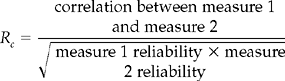
For example, if the correlation of the two measures is 0.40 and their reliability is 0.80 and 0.90 respectively, then the correlation corrected for attenuation is 0.47:

The corrected correlation is larger than the uncorrected one.
When the reliability of only one of the measures is known, the formula is
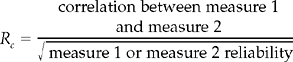
For example, if we only knew the reliability of the first but not the second measure then the corrected correlation is 0.45:
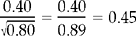
Typically we are interested in the association or relationship between more than two variables and the unreliability of the measures of those variables is corrected by using structural equation modelling.
Get a 30 day FREE TRIAL
-
 Watch videos from a variety of sources bringing classroom topics to life
 -
Read modern, diverse business cases
-
Explore hundreds of books and reference titles

Read next

More like this
Sage Recommends
We found other relevant content for you on other Sage platforms.
Have you created a personal profile? Login or create a profile so that you can save clips, playlists and searches